

What do successful organizations with high employee engagement have in common? I’ve observed some principles that, without fail, are at work—vision, values, communication, collaboration, and others. The key is to “live them”—not just give them lip service.
1. Alignment with the Mission: An important step to creating an engaging environment is to address the “whats” and “whys.” Why does the organization exist? What are you trying to achieve? What’s in it for customers, employees, shareholders and others? As a leader, remember that it’s what you do, rather than what you say, that really matters. There are countless organizations that codify their mission and values, but then encourage an entirely different set of behaviors through their policies and actions. Delivering great customer experiences may be the objective, but insufficient staffing resources or standards that stress volume-oriented production may send conflicting messages.
2. Effective Communication: You and I hear it all the time: communication is vital. It’s true. Effective leaders at all levels, whether CEO or supervisor of a small team, are predisposed to keeping teams in the know. Good and bad, so nobody is second-guessing or wondering. When good communication is lacking the symptoms are predictable: conflicting objectives, unclear priorities, and low morale, to name a few. What’s not given as much attention is the question: what should you be communicating? I’ve observed organizations that communicate—a lot. But far too much of it is unnecessary or counterproductive: rules, policies, top-down cheerleading.
What’s a better focus? Listening is a great place to start. Listening is communication. And it is essential. Remember the wise observation: we’re born with two ears but just one mouth for a reason. Another vital aspect of communication is recognition. What are you acknowledging and celebrating? What are you reinforcing? In study after study, participants say that personalized and sincere recognition—simply being recognized for doing a good job—is a powerful motivator.
3. The Right Goals and Metrics: Be very careful when setting goals and interpreting metrics. Beyond rote assembly lines, one of the biggest challenges in many organizations is that the work arrives randomly from moment to moment. That’s true in a restaurant, a retail store, a contact center, a hospital’s emergency department, and many other environments. Those delivering services don’t control customer arrival rate, or the issues they need help with. So, if you’re measuring success based on a production metric—e.g., how many customers are helped in a set amount of time—you may not be seeing the real picture.
Of course, even the most enlightened organizations set expectations. Getting things done—done right and on time—are not bygone ideas. You’ll need to establish expectations that make sense and that employees buy into. It doesn’t matter if someone has the most incredible knowledge and expertise if they’re not there when customers or colleagues need help. While schedules should not be overly rigid, they matter. Does your team understand the importance of timing? Being in the right place at the right times is just an enabler.
The other part of the equation is doing the right things—quality. Sensible and well-defined quality standards should provide necessary guidance for every employee to know what to do. In that context, they can and must be empowered to make decisions and take action. Conflicting objectives are a killer to motivation and engagement. Ask your employees if there’s ever a time they feel they have to choose between acting in the best interest of a customer and hitting a performance target. If so, revisit and revise your objectives so that they complement each other.
4. Opportunities to Grow: Lack of development opportunities is a serious demotivator, especially for younger generations. And it is so unnecessary in today’s organizations. Building an organization focused on customer experience requires diverse skills and knowledge. Think about it—there’s the products and services, the support you provide to them, internal and external communication, technology, processes, data analytics, and much more. Don’t let your best employees get bored! Find ways to develop their skills and expand their responsibilities.
5. Strategic Coaching: Strategic coaching is also essential to employee engagement. By strategic, I mean ongoing, holistic and focused on developing the whole person. (Tactical coaching is limited in focus to specific skills or requirements.) Think of how athletes, from grade school to the pros, describe their most influential coaches. You’re probably thinking of words like mentor or supporter. Or maybe a phrase, like “somebody who looks out for my best interest,” or “wants me to be the best I can be.”
When effective, coaching is something your employees want and look forward to. It begins by understanding that coaching is a relationship, NOT an event. The best coaches build relationships of trust, respect and accountability. They help clarify goals, give honest and helpful feedback, and provide positive reinforcement. (Coaching doesn’t become less important as an employee moves up the ladder. If anything, it increases. I’ve been a coach to senior-level executives and have in turn hired excellent coaches to work with me. Frankly, I’d feel lost without the perspectives they bring.)
The most common and, ultimately, most effective coaching is self-coaching. It’s that self-talk each person has with themselves day by day, moment by moment. The leadership secret here is to approach training, coaching, and standards as opportunities to empower your employees to coach themselves. They must deeply understand the organization’s mission and values. And they must be empowered to make good decisions on the fly. That’s a strength that will then play out every moment of every day. And it’s one of the strongest influences on employee engagement.
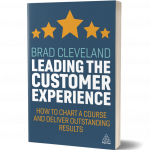
Excerpt from Leading the Customer Experience: How to Chart a Course and Deliver Outstanding Results by Brad Cleveland.


0 Comments